Commercial Planters vs. In-Ground Landscaping: The Differences
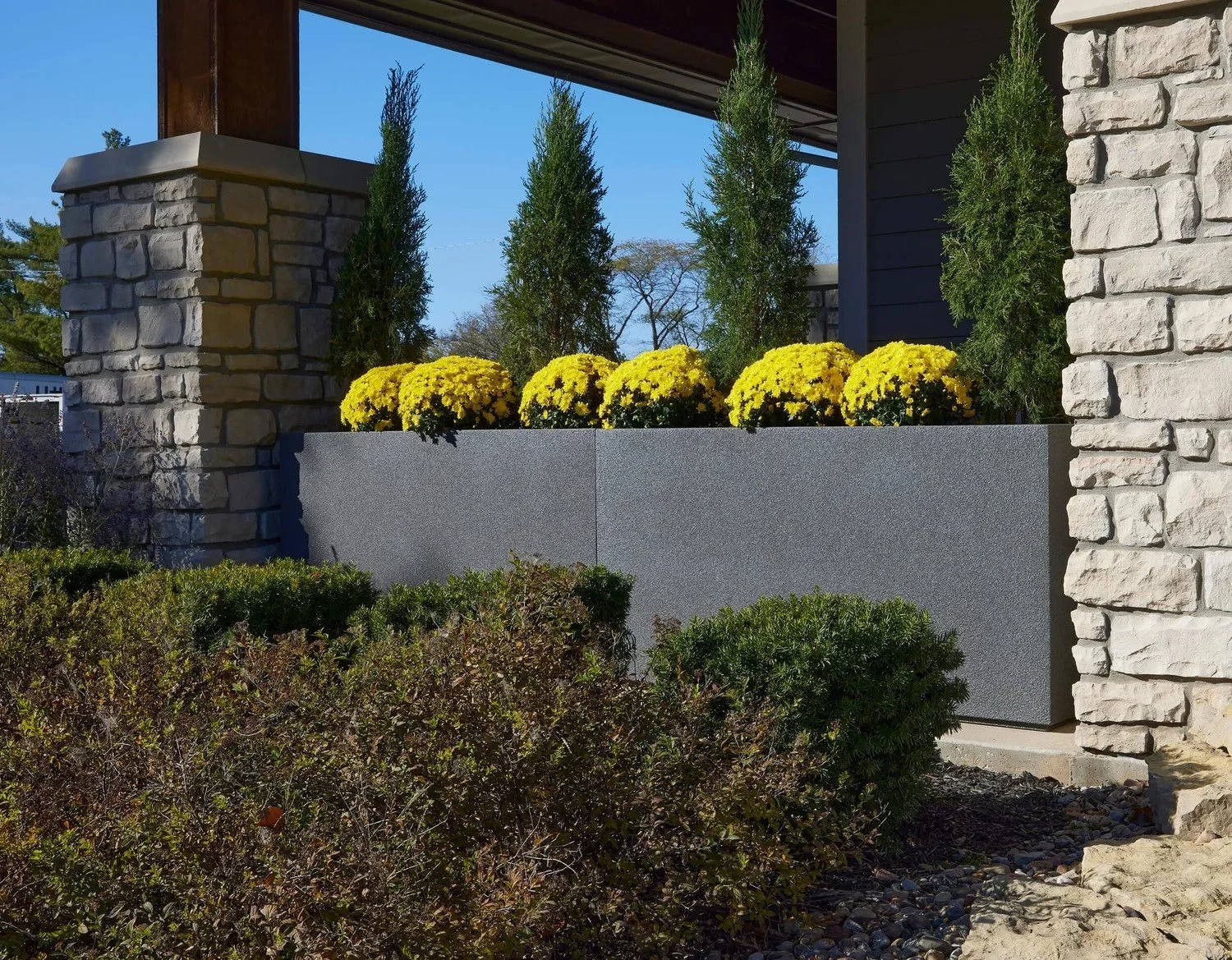
Plants can grow in the ground or in planters, provided they have rich soil, sunlight, and water. However, just because a plant can grow in both conditions doesn’t mean the plant is thriving. Commercial planters and in-ground landscaping vary significantly, with numerous differences that impact a plant’s health and its ability to flourish.
Whether you have commercial planters or plants directly in the ground, you could be missing out on healthier plant growth. Continue reading as we compare planters vs. in-ground landscaping and a bit more about our PolyMade planters so you can make your green thumb even greener.
Differences Between Planters vs. In-Ground Landscaping
Planters and in-ground landscaping both provide plants with an environment to grow, but are they really the same? Below are some of the major differences between planters and in-ground landscaping:
Temperature Stability
Thermal stability is critical for plant health; most plants can go into shock when temperatures shift from cold to scorching hot. Drastic temperature shifts can make new growth on a plant vulnerable, leading to poor flowering or even killing the plant entirely. Poor temperature stability also results in soil heaving and reduced vigor for plants that aren’t as hardy, leading to pest infestations and diseases.
In-ground landscaping is a great option for some plants, but those that aren’t native to the area or aren’t hardy have a harder time thriving when planted directly in the ground as opposed to a high-quality commercial planter. Planting directly in the ground offers limited soil options, making it challenging for plants to flourish in heavy clay or sandy soil. Plants placed directly in the ground aren’t as protected from fluctuating temperatures as those in a commercial planter.
Moisture Retention
Another main difference between commercial planters and in-ground landscaping is moisture retention. Soil can retain water depending on soil type, its watering schedule, and drainage. All plants require moisture to survive, some more than others. Underwatering can lead to wilting, reduced photosynthesis, and fewer nutrients in the soil, while overwatering can lead to root suffocation, fungi and disease, and nutrient deficiencies.
Unfortunately, planting directly in the ground limits the options for controlling moisture retention, unlike planters, which allow for this. No one can control how often it rains or doesn’t rain, forcing landscapers to rely on a watering system to keep the soil moist. Whether you live in the Midwest, North, South, or West, the weather can be unpredictable, and relying on nature to give your plants the necessary water to flourish is risky. Planting plants in a commercial planter allows for control over watering and how well the soil retains moisture.
Pest Exposure
No one wants to inspect their plants only to realize they’re infested with aphids or spider mites. These tiny, crawly insects often invade plants when they’re overwatered or have poor soil conditions; wet soil encourages soil pests like fungus gnats to flock to your plant, only to multiply and invade your plant.
Commercial planters offer more control over the risk of overwatering and keeping soil moist without attracting pests. Depending on the commercial planter’s material and its drainage capabilities, it can help keep pests away, keeping your plants healthier.
Accessibility
Where are your commercial planters or in-ground landscaping spots located? Do they allow for easy access for watering and tending to the plants, or is it difficult to efficiently care for the plants, requiring you to reach up or bend down? In-ground landscaping isn’t ideal for those who have difficulty bending or kneeling, or for complex watering. In contrast, planters are higher off the ground, allowing for easier watering and accessibility. Some planters, like PolyMade, can have irrigation line channels installed for easier watering.
Soil
While soil is made of mineral particles, organic matter, water, air, and living organisms, in-ground soil and planter soil differ in several ways. For one, in-ground soil holds water longer than soil placed inside a planter, which is underground, whereas planter soil is above ground and exposed to more air, making it easier to dry up. Next, the planter soil has fewer microbes and fungi, but often contains fertilizers that release slowly over time.
Planters and in-ground landscaping have some differences, but they share the same goal: to help plants grow. While plants can thrive in either, they flourish in a PolyMade custom commercial planter, outperforming other planter materials and never cracking under pressure like other commercial planters do. PolyMade planters are the solution you’ve been searching for to help plants surrounding your hotel, restaurant, office, or hospital thrive and stay protected from fluctuating temperatures and exposure to the elements.
Why Choose a PolyMade Commercial Planter?
Plants perform exceptionally well in PolyMade commercial planters. Each unit is purpose-built using advanced lightweight composites that deliver structural integrity, design flexibility, and architectural appeal without the limitations of traditional planter materials.
PolyMade planters utilize a proprietary three-layer system: a high-density polystyrene core to minimize weight, a polyurea encapsulation that provides durable, impact-resistant flexibility, and a Dryvit™ stucco exterior that creates a refined, customizable finish. Together, these components form a high-performance planter solution engineered for the functional, aesthetic, and environmental demands of contemporary commercial landscapes.
Below are some of the many advantages of building a PolyMade commercial planter:
Fully customizable forms, dimensions, and color palettes
Integrated insulation for temperature stability
Moisture-retentive design that supports long-term plant health, outlasting the seasons
Root-protective construction for improved longevity
Modular planters for simplified installation, relocation, and reconfiguration
CAD-driven design and manufacturing for precision and consistency
Handcrafted in the USA
Food-safe certified materials
Designed for efficient shipping and straightforward installation
Your plants will not only grow but flourish in a PolyMade planter while adding brand recognition and other personal touches, making our custom planters unique to each client.
Let’s Design Your Custom Solution
PolyMade planters maintain their integrity and appearance through extreme weather conditions and temperature changes, delivering both beauty and reliability year after year. From initial concept through final installation, our experienced support team provides hands-on guidance at every stage. Our streamlined process makes customization effortless: we collaborate with you to define dimensions, refine specifications, select finishes, and finalize design details.
Connect with our team to learn how PolyMade’s custom commercial planter boxes can enhance your project, simplify installation, and create an environment where plants—and properties—thrive.