How to Solve Poor Soil Conditions with Raised Commercial Planters
Taking care of plants, whether you’re a landscaper, office manager, or tasked with caring for the greenery surrounding the building you work in, many factors can affect a plant’s health. Caring for plants goes beyond watering; plants also require varying amounts of sunlight, which means moving them around if they’re in a commercial planter, refreshing the soil, applying fertilizer, improving drainage, and other needs.
Solving plant health issues can be exhausting, as many problems mimic one another. For example, yellowing leaves can indicate underwatering and overwatering. While paying attention to the plant’s leaves and blooms is crucial, so is keeping an eye on the soil to ensure it’s healthy and draining properly. If your plant is exhibiting health issues and you’re unsure whether they’re soil-related, continue reading - we’ll discuss how to diagnose and solve poor soil conditions and how raised commercial planters can help.
How to Identify Soil Problems in Your Plants
Even landscapers with decades of experience under their belt can be stumped when it comes to solving plant health issues, including soil problems. Because plant issues can exhibit signs that mimic one another, it can take a while for a plant to show issues caused by poor soil conditions, making it tricky to identify. Below are some ways to identify soil problems in your plants:
Discolored Leaves
If your plant’s leaves are usually a vibrant green but have since discolored and are yellowish, it could be thanks to poor soil conditions. As previously mentioned, many plant health issues can mimic one another, so your discolored leaves could be caused by overwatering, underwatering, or poor soil conditions. If you’re sure you’re not overwatering or underwatering and the leaves are still yellow, the soil is likely to blame.To be vibrant green, plants require a few things: sunlight to maintain healthy chlorophyll levels, the right amount of water, and healthy soil. Too much or too little water can discolor leaves and affect the plant’s roots, just like poor soil. Soil must be rich in nutrients to make more chlorophyll so the plant can thrive, but soil that lacks nutrients, like nitrogen and magnesium, can cause leaves to turn discolored.
Stunted Growth
Plants show us they’re healthy with their growth. From vibrant green leaves with plenty of growth or a flowering plant that has bright blooms, it’s easy to spot when a plant is thriving. However, it’s also easy to spot when a plant is struggling, and stunted growth is one of those ways. Stunted growth can be caused by numerous things, but it’s likely poor soil conditions.
Soil that’s low in nutrients makes for a plant that fails to grow, often causing weak roots. Soil with a poor pH level—lower than 6.0 or higher than 7.0—can cause stunted growth because the plant lacks vitamins like phosphorus, nitrogen, and potassium to grow and thrive.
Standing Water
Have you skipped a watering or two only to discover there’s still standing water surrounding your plant? Poor drainage can cause many plant issues, including stunted growth, root rot, and imbalances that can be hard to recover from. Water should ideally be absorbed through the soil, and any excess should drain away from the plant to keep the soil moist and give it time to dry out between waterings. However, poorly drained soil waterlogs it, compacting the soil and causing issues.
Wilting Leaves
Wilting leaves could imply the plant has been overwatered or underwatered, but if you’re sure you’re giving it the proper amount of water, those wilting leaves are likely caused by poor soil conditions. Again, soil that lacks nutrients from too much or too little water and poor drainage can cause leaves to yellow and wilt. Wilting leaves despite proper watering means it’s time to test the soil.
How Raised Commercial Planters Solve Poor Soil Conditions
Luckily, poor soil conditions can be solved, saving your plant’s life, assuming it doesn’t have advanced root rot. To save your plants that have poor soil conditions, the best solution is to transfer them to a raised commercial planter. Raised commercial planters solve poor soil conditions by offering the following advantages:
They Offer Better Drainage
One advantage of using raised commercial planters is that they offer better drainage than planting directly in the ground. A raised commercial planter should have pre-drilled drainage for excess water to exit the planter rather than remaining in the soil or waterlogging the plant. While your raised commercial planter will aid in moisture retention, it’ll also have the proper drainage to keep the plant’s soil healthier.
They Offer Better Aeration
Soil is healthier if it has time to aerate, allowing it to dry up a bit before the next watering. However, planting directly in the ground doesn’t allow for great aeration, especially if you have compacted soil. Using a raised commercial planter provides better aeration that keeps the soil rich in nutrients and your plants thriving.
You can Use High-Quality Soil
When you place plants directly in the ground, you’re forced to use the existing soil. Even if you mix in high-quality soil into the in-ground soil, you’ll still have some of the in-ground soil surrounding your plant. While mixing soils is a great idea, it might not be enough for your plant to thrive in the ground, especially if you have poor soil conditions. Fortunately, planting in a raised commercial planter gives you the freedom to use high-quality soil that’s rich in nutrients and texture, offering more benefits.
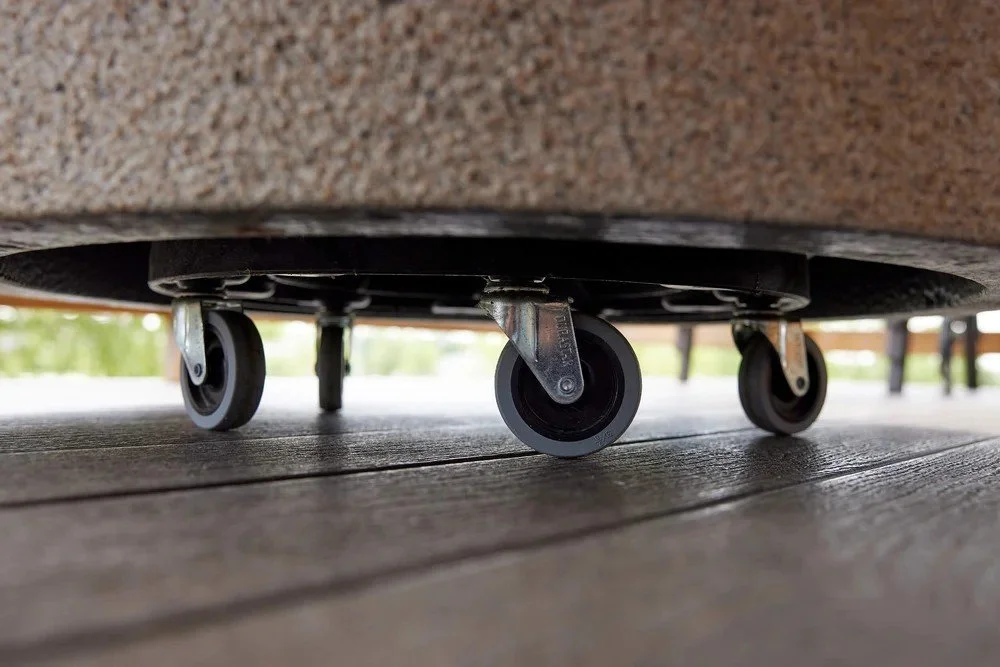
Using raised commercial planters, specifically a PolyMade commercial planter, offers more benefits than just improved soil conditions. Because they’re raised off the ground, they’re easier to adjust, giving you the freedom to move them around your property, giving your plant better direct or indirect sunlight, and changing your layout. They also provide better moisture retention and temperature stability, creating more lush, beautiful plants and flowers.
Let’s Design Your Custom Raised Commercial Planter
PolyMade planters maintain their integrity and appearance through extreme weather conditions and temperature changes, delivering both beauty and reliability year after year. From initial concept through final installation, our experienced support team provides hands-on guidance at every stage. Our streamlined process makes customization effortless: we collaborate with you to define dimensions, refine specifications, select finishes, and finalize design details.
Connect with our team to learn how PolyMade’s custom commercial planter boxes can enhance your project, simplify installation, and create an environment where plants—and properties—thrive.